HOUSE MANAGEMENT • RESIDENTIAL DIRECTORY
Houses
Manage the Provider's residential house directory, occupancy models, risk, capacity, alerts, and compliance context.
House Management may display PHI, residential addresses, staffing assignments, medication-related readiness, behavior-support information, compliance findings, and operational alerts. Screenshots in this public guide use redacted or demonstration information. Certain residential controls, validation rules, staffing logic, corrective-action workflows, security controls, and Provider configuration are intentionally summarized and are trained directly for authorized Provider customers.
This documentation describes a True Care System workflow designed to support Pennsylvania Chapter 6400-style residential operations. It is not legal advice and does not replace the Provider's responsibility to follow current licensing requirements, individual plans, payer rules, fire-safety requirements, staffing plans, medication requirements, and any state-specific standards that apply to each home.
Purpose
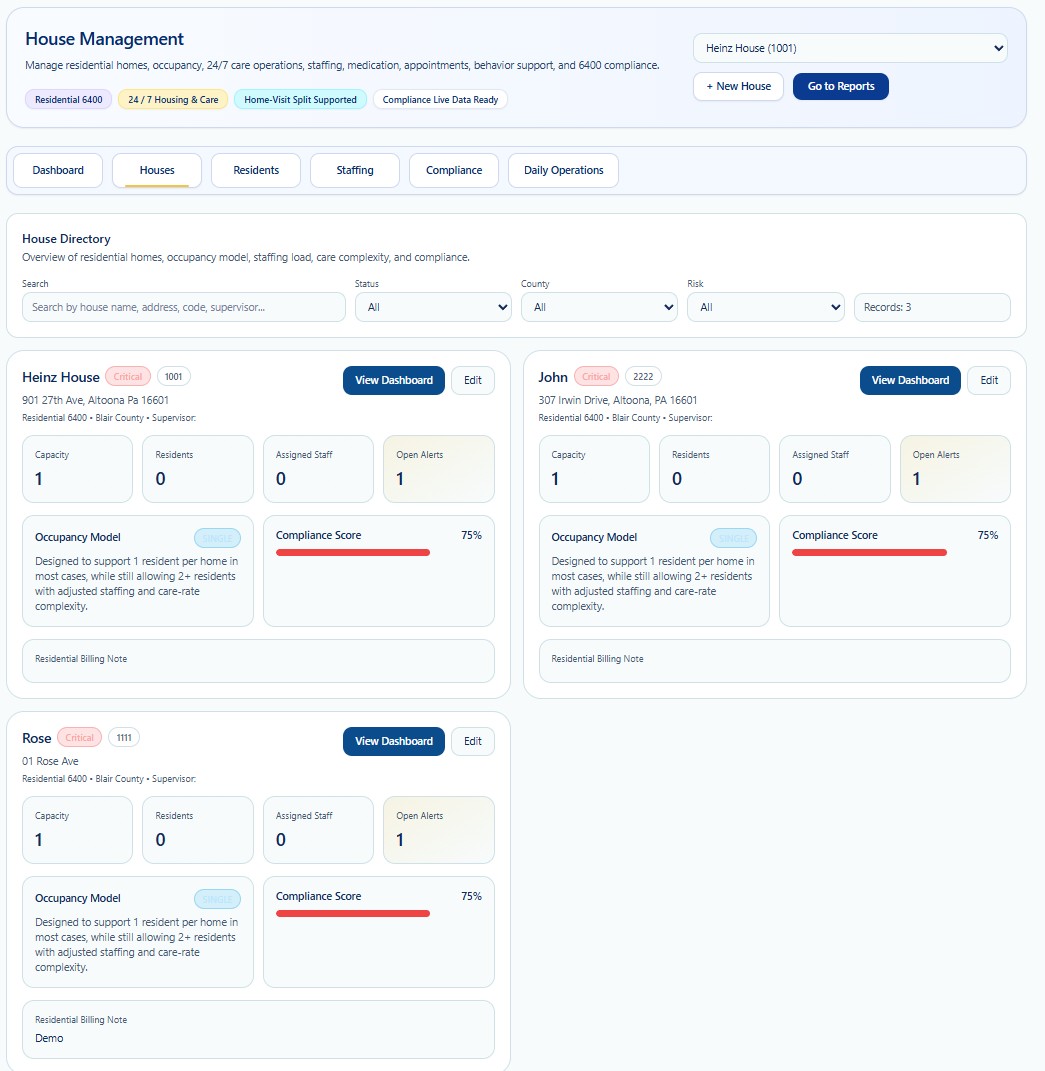
The Houses workspace is the Provider's residential directory. It allows authorized staff to search and compare homes by status, county, risk, capacity, census, staffing, alerts, occupancy model, and compliance score.
Directory Controls
Search by house name, address, code, or supervisor. Filter by status, county, and risk. Open the house dashboard or edit approved house-profile information according to role permissions.
Occupancy Models
The system supports one-person and shared residential homes. Capacity should reflect the actual licensed and approved operating model, not simply available physical space. Providers remain responsible for ensuring that resident count, room use, staffing, accessibility, fire safety, assessed need, and service-plan requirements remain within applicable standards.